Private Mole Removal in the UK: What to Ask Before You Book
Booking private mole removal is a straightforward process for most people, but it is easy to go in underprepared. Patients regularly report being surprised by costs they didn’t expect, scarring that took longer to fade than they’d imagined, or discovering after the fact that the clinic they chose wasn’t quite what they assumed. This guide won’t tell you where to go or what to do medically. What it will do is help you ask better questions before you part with any money.
What patients tend to worry about before booking
Scarring is the concern we see raised most often, especially for moles on the face, neck, or shoulders. People want to know not just whether a scar will form, but how noticeable it will be and how long it will take to settle. The honest answer is that it depends on a lot of factors: the method used, where the mole sits on the body, your skin type, and how carefully you follow aftercare guidance. What catches many patients off guard is that healing takes much longer than expected. Initial wound closure typically takes one to two weeks, but the scar itself can continue to change and fade for up to twelve months.
A second common concern is whether the mole is actually dangerous. Plenty of people go private specifically because something has changed or looks different, and they don’t want to wait. Others are removing a mole for cosmetic reasons or because it catches on clothing. Either way, most patients want to know the clinic will properly assess the mole, not just remove it without looking carefully first.
What does private mole removal actually cost?
Prices vary considerably depending on where you are in the UK, the type of clinic, the removal method, and what is included in the quoted fee. Based on patient-reported experiences and publicly available clinic information, here is a rough picture.
- Initial consultation: typically £100 to £300, sometimes deductible from the procedure cost if you go ahead.
- Mole removal (single mole, procedure only): broadly £150 to £500, with London clinics often at the higher end.
- Histology (lab analysis of the removed tissue): this is frequently charged separately and adds roughly £100 to £200 to the total. It is often not included in headline prices.
- Multiple moles: many clinics offer a reduced rate per mole when several are removed in the same session, with savings of 15 to 30 percent common.
Note: price figures are drawn from publicly reported patient experiences and may not reflect current rates at any specific clinic.
The most consistent financial surprise patients report is being quoted a headline procedure price and only finding out later that histology is an optional extra. For any mole that is pigmented or has been changing, most medical sources treat sending the tissue for analysis as standard practice, not an add-on. Always ask for a written, itemised breakdown before agreeing to anything.
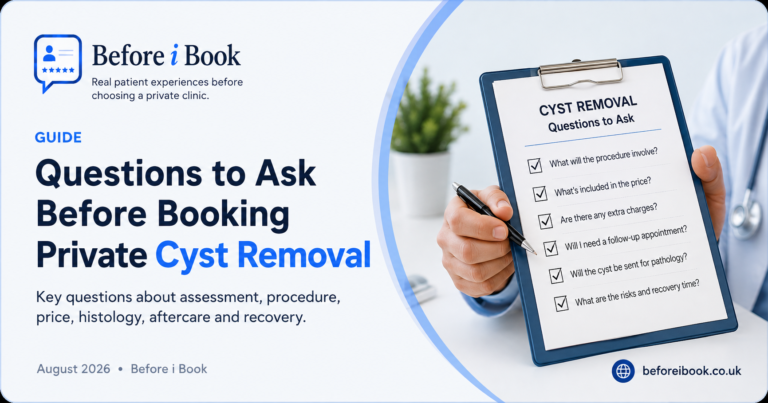
Questions worth asking any clinic before you book
These are the questions patients most commonly say, in hindsight, they wish they had asked:
- Is histology included in the price, or is it extra? Get this in writing before you commit.
- Who will actually perform the procedure? There is a meaningful difference between a consultant dermatologist, a GP with minor surgery training, and a practitioner without a medical background. Ask specifically about the qualifications of the person who will be removing the mole.
- Will the mole be assessed properly before removal? A reputable clinic should examine the mole carefully, ideally using a dermatoscope, and discuss removal options with you rather than simply booking you in.
- What is the realistic scarring outcome for this mole’s location? A good clinician should be able to explain, before the procedure, what the likely cosmetic result will be for your specific case.
- Is there any risk the mole could come back? Some removal methods carry a higher chance of regrowth than others. One in ten moles removed by shave excision has been reported to re-emerge, sometimes within months. Knowing this beforehand allows you to make an informed choice about the technique used.
- Is the clinic CQC-registered? In England, clinics carrying out procedures like this should be registered with the Care Quality Commission. It takes thirty seconds to check and is worth doing.
Red flags to watch for
A few things that experienced patients and clinical guidance consistently flag as warning signs:
- No histology offered or recommended. Any service removing moles without offering to send the tissue for analysis should give you pause, particularly if the mole has changed or looks unusual.
- The practitioner is not medically qualified. Mole removal is offered by some beauty and aesthetics clinics. That is not the same as a medically supervised service, and a missed diagnosis in that context has real consequences.
- Laser is the only option on offer. Laser removal does not produce a tissue sample, so it cannot confirm whether a mole is completely benign. It may be appropriate for certain straightforward cases, but a clinic offering it as the default for all moles, including changing or pigmented ones, warrants scrutiny.
- Vague pricing or unexpected extras. If the quote changes between your initial enquiry and your appointment, or if you are being asked to make a same-day decision under any kind of pressure, take your time.
- No pre-removal assessment. Being quoted a price and booked straight in for removal, without anyone examining the mole first, is a concern.
What tends to make for a good experience
Patients who describe positive outcomes tend to share a few things in common. Their clinician took time to look at the mole properly and explain the options. The pricing was transparent and itemised upfront. They were given realistic expectations about scarring and healing before the procedure took place, not after. And their mole was sent for lab analysis as a matter of course, giving them peace of mind once the results came back clear.
The procedure itself is often quicker and less uncomfortable than patients expect. Most removals are done under local anaesthetic, and the main sensation is pressure rather than pain. Many private clinics can offer consultation and removal on the same day if needed.
The thing that most consistently separates a good experience from a regrettable one is preparation. Knowing what questions to ask, and expecting clear answers, makes a real difference.
Have you had private mole removal in the UK? We’d like to hear what you wish you’d known before booking. Share your experience to help other patients avoid the same surprises.